
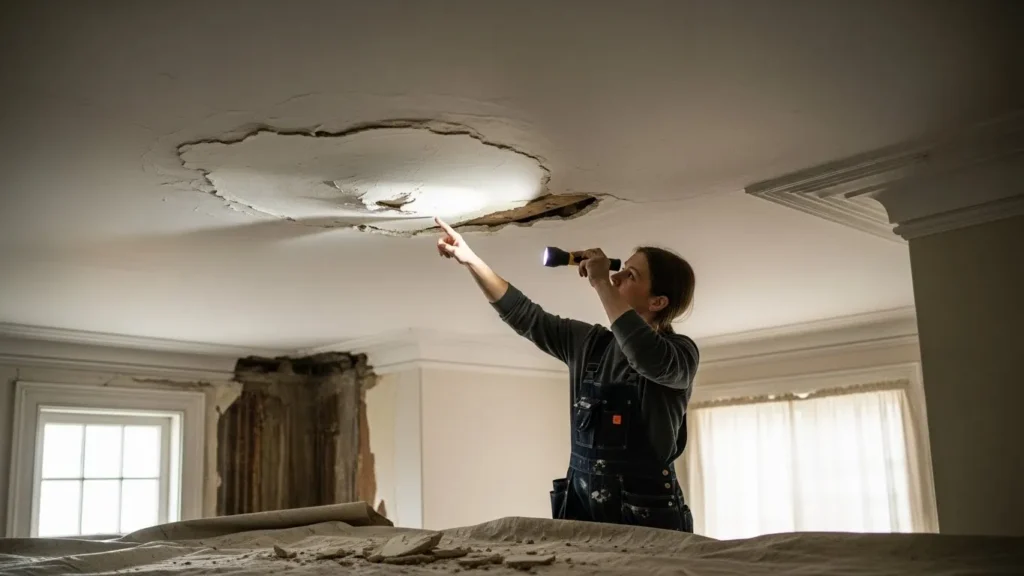
A bulging plaster ceiling is never “just cosmetic”. It usually points to adhesion failure indicators, substrate movement, or hidden moisture distribution patterns that are pushing the finish out.
I’ve seen homeowners paint over a bulge to “seal it”. It looks fine for a week, then the microcracking formation starts and the edge drops. If you want a smooth finish quality, you deal with the cause first, not the shape.
Is It Normal If You Deal with Bulging Plaster Ceilings Without Hiring?
Some bulges are small and stable. Others are a warning that the ceiling may fail. The difference is how the plaster behaves when you test it and whether the room has any humidity-driven curing behavior or leaks.
If you can see a bulge and it also sounds hollow, treat it like a safety job. This is the point where Plasterers Durham usually recommends isolating the area and testing for plaster integrity assessment before any patching.
Small Bulge You Can Monitor
A shallow rise that does not change, has no dust trails, and feels firm may just be old plaster expansion–shrink response or a thick repair.
Bulge You Should Not Ignore
If it flexes, grows, drops dust, or sits under a stained patch, you’re likely looking at weak keys, loose backing, or substrate suction variation after earlier repairs.
What Affects Deal with Bulging Plaster Ceilings for Homeowners?
Homeowners get stuck because bulges feel random. They are not. A bulge is usually the end result of several small issues stacking up over time, especially poor surface preparation in older repairs.
Before you touch the ceiling, work out what you are dealing with and how risky it is.
- Loose Bond to The Background
A hollow sound often means the plaster has separated from the substrate. That is classic adhesion failure indicators, and patching the face will not hold. - Trapped Moisture and Slow Drying
Moist rooms change material setting kinetics and push the plaster through uneven curing cycle progression. The bulge is a symptom, not the problem. - Old Repairs and Mixed Materials
A hard patch beside softer plaster creates surface tension irregularities. That mismatch can lift edges during seasonal movement.
Once you know the driver, you can pick a repair that matches the ceiling, instead of gambling with a quick fill.
What Affects Deal with Bulging Plaster Ceilings Before Painting?
Painting is where a hidden bulge turns into an obvious failure. Primer and paint change the surface sheen, so any visual defect evaluation becomes brutal under daylight and angled lamps.
The biggest mistake is timing. If the ceiling has moisture, painting can trap it and worsen evaporation-phase inconsistencies. If the plaster is loose, paint adds weight and can pull a weak edge down.
If Plasterers Durham is called after a failed paint job, the fix is usually bigger because the paint film has to be scraped and the ceiling needs stabilising before any skim coat work.
Which Method Gives Deal with Bulging Plaster Ceilings in Damp Rooms?
Damp rooms need a different mindset. You are not only repairing a bulge. You are restoring a ceiling that is reacting to moisture, temperature swings, and airflow.
Here’s a practical way to choose the method, using short “points” you can follow on site.
First, Control the Environment
Get extraction running. Keep steady warmth. Avoid blasting heat straight at the ceiling, which can cause thermal gradient effects and new cracking.
Second, Stabilise the Background
Use the right bonding agent properties for the surface. High suction areas need controlled suction, or you will get patchy set and more movement.
Third, Repair Based on Stability
If it is firm but proud, you may level it with careful prep and a thin undercoat blending methodology before skimming. If it is loose, you remove and rebuild.
In damp areas, the best repair is the one that survives the next winter. That means moisture first, finish second.
Read Also: How Messy Is Ceiling Plastering and How to Protect Your Room
When Should You Deal with Bulging Plaster Ceilings During Drying?
A bulge can show up during drying on fresh work, especially after a repair skim. Watch the ceiling as the color changes and the set tightens through the hydration reaction stages.
Acting at the right moment stops you chasing defects after everything hardens.
- Early-Stage Checks
Look for sudden dark patches and soft rings that suggest uneven suction or poor bonding. That links to patchy absorption anomalies. - Mid Stage Checks
Use a light at a low angle to spot trowel ridge development and raised edges. Mark any lift so you can recheck after full set. - Late-Stage Checks
If a bulge is still moving late, stop trying to “trowel it flat”. You risk tearing the surface and locking in uneven drying signatures.
If you see movement during drying, the safest move is to pause, let it cure, then decide whether it needs removal or reinforcement.
Why Does Deal with Bulging Plaster Ceilings Happen in Plastering Work?
Bulges are rarely “bad luck”. They come from predictable failures in the system: background, bonding, application, or drying.
When Plasterers Durham inspects these jobs, the same causes show up again and again.
Background Issues
Loose dust, old paint, or weak backing disrupt drywall substrate interaction and reduce grip. That leads to separation under load.
Application Issues
Overwatering, uneven thickness, or rushed trowelling creates weak zones and bubble entrapment causes. Those areas fail first.
Drying And Environment Issues
Rapid drying in one corner and slow drying in another creates stress. That stress shows up as bulges and later microcracking formation.
A proper fix starts with diagnosing which part failed. Otherwise, you are just hiding the problem until it returns.
How to Spot Deal with Bulging Plaster Ceilings for a Smooth Finish
Spotting matters because you can only achieve a true smooth finish if the ceiling is stable. A perfect skim over a moving bulge is still a failure, just delayed.
Start with simple tests, then move to closer inspection. Plasterers Durham often does these checks before recommending a skim coat or a full removal.
Step One: Tap Test
Use your knuckles or a handle. A hollow sound suggests separation. A solid sound suggests the plaster is still bonded.
Step Two: Edge Tracking
Lightly pencil the edge of the bulge. Recheck in 48 hours. If the edge grows, the ceiling is still moving.
Step Three: Angled Light Scan
Use a work light to spot ridges, edges, and shadows. That is your real visual defect evaluation, not what it looks like straight on.
If you want paint to look clean, you need the ceiling flat under side light, not just “good enough” under a pendant lamp.
Frequently Asked Questions
Is A Bulging Plaster Ceiling Dangerous?
Sometimes. A tiny rise can be harmless shrinkage, but a bulge that grows, sounds hollow, or sheds dust often means the plaster has lost its bond and may drop. Act early and keep people clear.
How Do I Know If the Bulge Is Loose or Stable?
Press gently and tap around it. A dull hollow sound, slight flex, hairline cracks, or dust trails point to failed keys. Mark the edge in pencil and recheck in 48 hours under angled light.
Can Damp Cause A Plaster Ceiling to Bulge?
Yes, it can. If plaster is still curing, trapped moisture and uneven drying can lift weak areas. Keep airflow steady, avoid blasting heat, and fix leaks first to stop repeat failure.
Can I Paint Over a Bulging Plaster Ceiling?
Only after repair and full drying. Paint will not stabilise loose plaster. If you paint too soon, you risk staining, cracking, and flaking. Prime repaired areas, then finish coats.
What’s The Best Fix for Bulging Plaster in A Bathroom?
In damp rooms, solve moisture first. Improve extraction, warm the space, and check for leaks. Use a suitable bonding coat, then repair and skim once the background stays dry for several days.
Can I Fix a Small Bulge Without Removing the Ceiling?
Small patches can be fixed with washers and screws, then taped and skimmed. Larger sagging areas often need removal and replastering to restore safe adhesion and a flat finish that lasts.
Why Does Plaster Bulge After a Skim Coat Repair?
Bulges form when keys fail, laths move, or suction varies across the substrate. Overwatering, weak bonding, and temperature swings add stress, so diagnose before you patch or skim over it.