
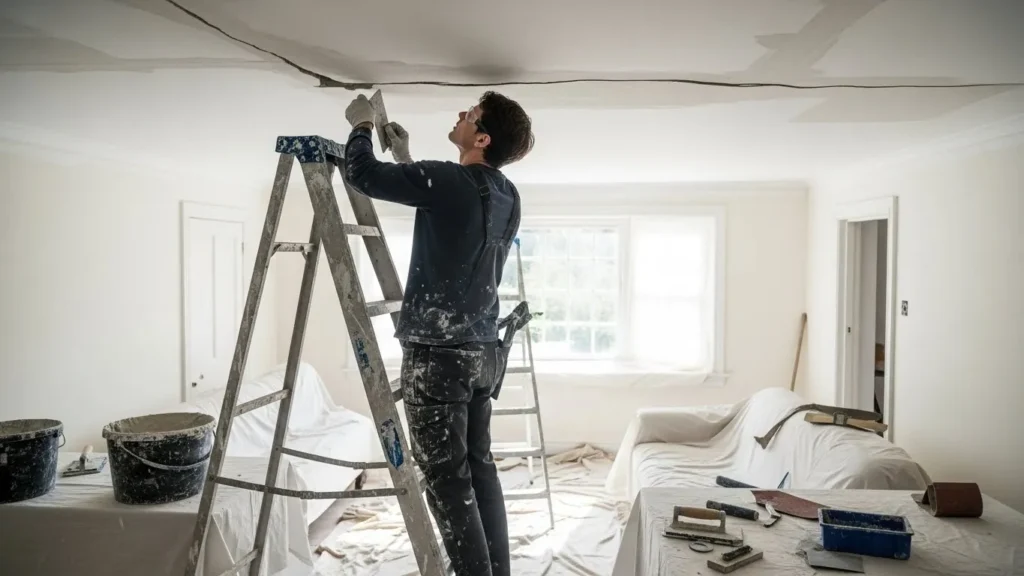
Repairing cracks in a plaster ceiling proves essential for maintaining structural integrity, preventing further deterioration, and preserving the aesthetic appeal of Durham homes. Ceiling cracks ranging from hairline fractures to wide structural splits indicate various underlying issues demanding immediate attention before minor problems escalate into costly full ceiling replacements. This comprehensive guide explores professional techniques for identifying crack severity, understanding root causes, and implementing lasting repairs that restore your ceiling to perfect condition whilst preventing future damage.
Understanding Different Types of Plaster Ceiling Cracks
Hairline cracks measuring less than 1mm wide typically result from natural building settlement, temperature fluctuations, or minor plaster shrinkage during drying processes. These superficial fractures rarely indicate structural concerns and respond well to simple filling techniques using flexible filler compounds. Durham’s temperature variations between seasons cause plaster expansion and contraction, creating hairline cracks particularly common in properties over 10 years old.
Spider web pattern cracks radiating from corners or light fixtures suggest excessive ceiling movement, inadequate support, or stress concentration at weak points. Wide cracks exceeding 3mm accompanied by sagging sections indicate serious structural problems potentially involving joist failure or water damage requiring immediate professional assessment. Discoloured cracks showing brown or yellow staining reveal active or historic water leaks demanding source elimination before repair work commences.
What Causes Plaster Ceiling Cracks in Older Durham Properties
Structural movement from building settlement represents the primary cause of ceiling cracks in older Durham properties, particularly those built before 1950 with traditional lath and plaster construction. Foundations settling unevenly over decades create stress patterns transferring through walls into ceiling structures, manifesting as diagonal or stepped cracks. Clay soil prevalent across Durham expands during wet periods and contracts when dry, causing cyclical ground movement that continuously stresses building foundations.
- Water damage from roof leaks, burst pipes, or condensation saturates plaster causing swelling, loss of adhesion, and subsequent cracking as materials dry
- Temperature and humidity fluctuations cause plaster materials to expand and contract repeatedly, gradually weakening bonds and creating stress fractures
- Poor original workmanship including inadequate keying, weak plaster mixes, or insufficient drying time between coats creates inherent weaknesses manifesting as cracks
- Vibration from heavy traffic, nearby construction, or internal activities like slamming doors transmits stress through ceiling structures
- Ageing plaster losing flexibility and becoming brittle makes older Durham ceilings increasingly susceptible to cracking from minor movements
Ceiling overload from excessive insulation weight, stored items in lofts, or heavy light fixtures exceeds joist capacity, causing deflection and resultant plaster cracking. Plasterers Durham identifies root causes before commencing repairs, ensuring effective solutions rather than temporary cosmetic fixes.
Which Method Gives Best Results for Repairing Plaster Ceiling Cracks
Small Crack Repair Technique
Begin by widening hairline cracks using a sharp scraper or filling knife, creating V shaped grooves approximately 3mm to 5mm deep that accept filler effectively. Remove all loose plaster debris, dust, and crumbling material using a stiff brush or vacuum, ensuring clean surfaces for optimal filler adhesion. Apply PVA solution diluted 3 parts PVA to 1 part water, sealing porous plaster edges and improving subsequent filler bond strength.
Medium Crack Reinforcement Method
Medium cracks between 3mm and 6mm wide require fibreglass mesh tape reinforcement preventing crack recurrence through movement absorption. Apply thin plaster filler layer, press mesh tape firmly into the wet compound spanning the entire crack length plus 50mm either side. Second filler coat applied over dried tape embeds reinforcement completely, followed by feathering edges 150mm beyond tape for imperceptible transitions.
Structural Crack Professional Repair
Cracks exceeding 6mm width with associated sagging demand professional intervention involving structural assessment, potential joist reinforcement, and comprehensive replastering. Plasterers Durham utilises specialist bonding plasters, metal reinforcing mesh, and proven techniques addressing underlying structural issues before surface restoration. Complex repairs may require ceiling sections removal, timber treatment, and complete replastering costing £280 to £440 for medium rooms.
What Triggers Ceiling Crack Development During Plastering Work
Rapid drying from excessive heat or inadequate ventilation causes plaster to shrink unevenly, creating stress fractures before complete curing occurs. Professional plasterers control drying rates using appropriate room temperatures between 15°C and 25°C whilst maintaining moderate humidity levels. Durham’s variable climate demands careful timing of plastering work, avoiding extreme temperature periods that compromise proper curing.
Insufficient suction control on highly porous backgrounds allows water to be drawn from fresh plaster too quickly, preventing proper chemical setting and causing shrinkage cracks. Applying plaster coats that are too thick creates differential drying rates between surface and depth, leading to map pattern cracking as outer layers cure faster. Incorrect plaster mixing ratios with excess water produces weak compounds lacking structural integrity, whilst insufficient water creates unworkable mixes that crack during trowelling.
Read Also: How to Repair a Plaster Ceiling from Water Damage
What Reduces Ceiling Crack Formation During Drying Periods
Maintaining consistent room temperatures throughout drying periods prevents thermal stress that causes fresh plaster to crack as it cures. Avoid using radiators, heaters, or dehumidifiers that accelerate drying beyond optimal rates recommended by plaster manufacturers. Durham properties should allow natural air circulation through partially opened windows rather than forced ventilation removing moisture too rapidly.
- Apply plaster in appropriate coat thicknesses not exceeding 10mm for backing coats and 3mm for finishing layers
- Allow sufficient drying time between coats, typically 24 hours for backing plaster and 7 days before decoration
- Use quality branded plasters suitable for specific substrates rather than cheap alternatives that compromise durability
- Prime sealed or low porosity surfaces with bonding agents ensuring adequate mechanical key for plaster adhesion
- Control ambient humidity levels between 40% and 70% supporting optimal plaster curing without excessive shrinkage
Professional assessment determines appropriate repair materials matching existing plaster composition, ensuring compatible expansion rates preventing future cracking. Plasterers Durham provides expert guidance on material selection and application techniques for lasting crack repairs.
Understanding Ceiling Crack Repair Costs in Durham
Minor Hairline Crack Repairs
Small ceiling crack repairs covering limited areas typically cost between £150 and £200 across Durham, including materials and professional labour. DIY repairs using quality flexible fillers, sandpaper, and paint cost approximately £20 to £40 for materials alone. Professional work guarantees proper preparation, invisible finishes, and warranties protecting against recurrence within specified periods.
Medium Crack Reinforcement Work
Medium crack repairs requiring mesh tape reinforcement and multiple filler coats average £5 to £15 per square metre for remedial simple repairs. Entire ceiling crack repair projects covering multiple fractures across 15 square metre ceilings cost approximately £75 to £225 depending on crack severity. Durham plasterers assess all cracks during initial inspections, providing comprehensive quotations covering identified work.
Structural Crack Professional Restoration
Extensive structural crack repairs involving joist reinforcement, ceiling section replacement, and complete replastering range from £280 to £1,150 for large ceilings. Water damaged ceiling repairs including leak source elimination, timber treatment, and full restoration average £1,400 to £1,700 across Durham properties. Plasterers Durham offers transparent pricing with detailed breakdowns covering all repair aspects before work commences.
FAQ’s About Repairing Plaster Ceiling Cracks in Durham
Is It Normal for Plaster Ceilings to Crack Without Obvious Cause?
Yes, minor hairline cracks from natural building settlement, seasonal temperature changes, and normal plaster shrinkage occur commonly in properties over 10 years old.
How Long Does Professional Ceiling Crack Repair Take?
Small crack repairs take 2 to 3 hours, medium repairs require 3 to 4 hours, whilst structural repairs may demand several days including drying time.
Can I Repair Ceiling Cracks Myself or Need Professionals?
Hairline cracks suit confident DIY attempts, but medium cracks with sagging or wide structural fractures require professional plasterers ensuring safe, lasting repairs.
What Tools Are Essential for Ceiling Crack Repairs?
Scraper, filling knife, flexible filler, fibreglass mesh tape, sandpaper, PVA solution, primer, and matching ceiling paint complete basic repair kits.
Why Do Repaired Ceiling Cracks Sometimes Reappear?
Inadequate preparation, wrong filler choice, unresolved underlying movement, or insufficient reinforcement cause crack recurrence within months of initial repairs.
How Much Does Ceiling Crack Repair Cost in Durham?
Minor repairs cost £150 to £200, medium repairs average £5 to £15 per square metre, whilst structural repairs range £280 to £1,150.
Should Ceiling Cracks Be Repaired Before Decorating?
Yes, always repair and allow complete drying before decoration, as painting over cracks creates visible imperfections and prevents proper filler adhesion.