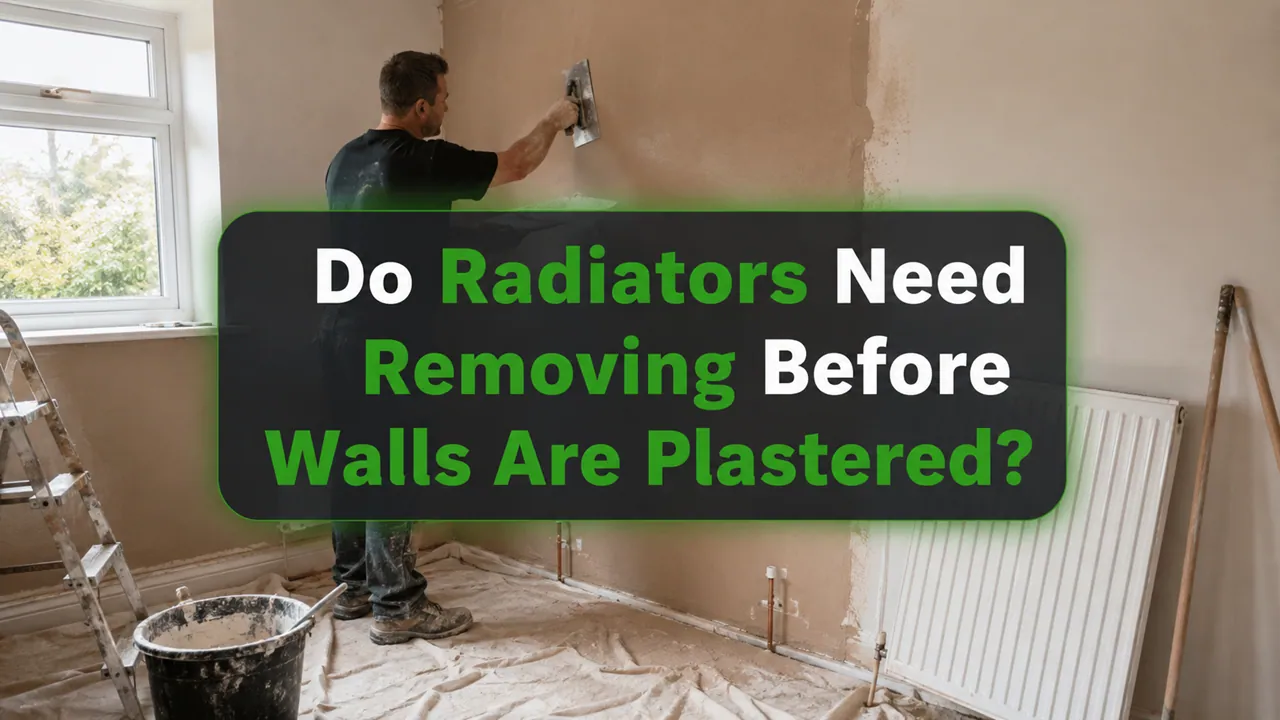
For full-wall skimming or replastering, it is normally better to remove radiators before plastering. This gives the plasterer access to the whole surface, including wallpaper, cracks and loose plaster hidden behind the radiator.
Removal may not be necessary for a small repair elsewhere on the wall. The decision depends on the work area, the condition behind the radiator and whether the appliance will be moved or replaced later.
When Should You Remove Radiators Before Plastering?
If the complete wall or room is being skimmed, radiator removal normally produces the most complete finish. The plasterer can inspect, prepare and finish the wall without working around brackets, valves and narrow gaps.
For a local repair away from the radiator, disconnection may add unnecessary plumbing work. The scope should be agreed before the plastering date so the homeowner knows which wall areas will and will not be finished.
Plasterers Durham offers internal plastering, patch repairs and skimming, so the preparation required will depend on the agreed type of work.
Full-Wall Skimming and Local Repairs Need Different Preparation
The size and location of the repair should guide the decision rather than applying one rule to every room.
| Planned Work | Is Removal Normally Advisable? | Main Reason |
| Skimming the entire wall | Yes | Allows one continuous finish |
| Replastering the whole room | Yes | Exposes all wall surfaces |
| Repair directly behind the radiator | Yes | Provides access to the damaged area |
| Small patch elsewhere | Not always | The radiator may not obstruct the work |
| Replacing the radiator | Usually | Old brackets and hidden areas may be exposed |
| Moving the radiator | Yes | Pipework and fixings should be altered first |
A radiator left in place does not automatically cause the new plaster to fail. The main limitation is that the concealed area cannot receive the same preparation and finish as the visible wall.
Why Does Radiator Removal Improve the Finish?
Removing the appliance allows the plasterer to work across the full width of the wall. Old coverings can be stripped, unstable material removed and the finishing coat applied continuously.
It also makes future decorating easier. Once the wall has dried, the decorator can reach the whole surface before the radiator is refitted.
Hidden Wall Coverings Can Be Removed
Wallpaper, lining paper, flaking paint and adhesive often remain behind old radiators. These materials should not be treated as a dependable background for new plaster.
Removing the radiator exposes the complete area so unsuitable coverings can be stripped before the wall is prepared.
Future Radiator Changes Are Less Restrictive
A replacement radiator may be smaller, taller or positioned differently. If the original radiator was plastered around, changing it could expose an unfinished outline or old wallpaper.
Completing the full wall first gives the homeowner more flexibility when the heating layout changes later.
Can a Plasterer Work Around a Radiator?
Yes. A plasterer may finish up to the visible edges where removal is impractical or not included in the quotation. This may be acceptable for an isolated repair.
However, plastering around a radiator does not create the same result as skimming the whole wall. Preparation remains limited behind the appliance, and the skim will normally stop where access ends.
For a complete room finish, professional wall skimming is easier to apply consistently when wall-mounted obstructions have been removed.
What Might Be Hidden Behind the Radiator?
A radiator can conceal wall defects for many years. The condition may only become clear once the appliance, wallpaper and previous decorations have been removed.
Loose or Hollow Plaster
Existing plaster may sound hollow, crumble at the edges or detach from the underlying wall. A thin skim cannot restore adhesion where the original plaster is already unstable.
The affected area may need a local repair, removal of loose material or more extensive replastering. The treatment should follow the condition found rather than assuming every hidden section needs replacing.
Previous Repairs and Cracks
Old pipe alterations, bracket holes and earlier patch repairs can leave an uneven background. Cracks may also continue behind the radiator even when only their visible ends can initially be seen.
Exposing the whole area allows the plasterer to decide which defects need preparation before applying the final finish.
Do Small Repairs Require Radiator Removal?
Not always. A small damaged patch near a doorway or on the opposite side of the wall can often be repaired without touching the heating system.
Removal becomes more relevant when the repair extends behind the appliance, the complete wall is being skimmed or the hidden background needs inspecting. The homeowner should understand that an excluded area will not receive the same finish.
The recommendation to remove radiators before plastering therefore applies mainly to complete wall treatments rather than every minor plaster repair.
Who Should Remove and Refit the Radiator?
Radiator disconnection may involve central-heating water, valves, system pressure and a heavy appliance. Reconnection can also require bleeding, repressurising and checking for leaks.
The responsibilities should be confirmed before work begins:
- Plasterer: Explains how much wall access and preparation are required.
- Plumber: Disconnects and reconnects the appliance where appropriate.
- Heating engineer: Deals with wider heating-system requirements when needed.
- Decorator: Completes the wall finish before or after refitting.
- Homeowner: Confirms which trade is responsible for each stage.
Not every plasterer undertakes plumbing work. Plasterers Durham should be asked whether removal is included in the quotation or must be arranged independently.
Homeowners who are unfamiliar with their heating system can use the short CIPHE directory to search for a plumbing or heating professional.
Should Brackets and Pipes Be Moved Before Plastering?
Bracket and pipe decisions should be settled before the final skim. Cutting into a newly plastered wall to reposition fixings or pipework creates avoidable repair work.
If the same radiator is returning to the same position, the trades may agree whether existing bracket locations should be retained or marked. They should only remain where they do not interfere with surface preparation.
When a New Radiator Is Being Installed
A different model may require new bracket spacing, altered pipes or another position. The old appliance and redundant fittings should normally be removed before the wall is finished.
This is particularly important when the replacement is smaller because more of the wall will remain visible.
When the Existing Radiator Will Return
Where the appliance, valves and pipes are staying unchanged, alterations may be minimal. The plasterer and plumber should still agree how fixings will be located after plastering.
Pipework can remain where it does not obstruct access, but planned movement should happen before the finishing coat is applied.
Can a Radiator Be Moved Forward Without Disconnection?
In some rooms, a radiator may be lifted from its brackets and carefully moved away while remaining attached to flexible pipework.
This is not a universal solution. Its suitability depends on the pipe material, valve condition, appliance weight, connection flexibility and available floor space.
Rigid or vulnerable connections can be damaged if the radiator is forced forwards. A plumber or heating engineer should decide whether moving it without full disconnection is appropriate.
When Can the Radiator Be Reinstalled?
There is no fixed waiting period for every project. The correct timing depends on the plaster thickness, wall condition, ventilation, fixing method and whether the surface will be decorated first.
Heavy brackets should not be installed before the wall can accept the required fixings. The plasterer should advise when drilling and refitting can proceed.
Decorating behind the radiator before it returns usually provides easier access. The detailed guide to plaster drying before painting explains the factors that affect the next stage.
How Should the Rest of the Room Be Prepared?
Radiator removal is only one part of preparing a room. Furniture, shelving, pictures and other wall-mounted fittings may also restrict the working area.
Floor protection and access arrangements should be agreed before the start date. Plumbing alterations should already be complete, while sockets and electrical components should only be handled by an appropriate person.
Good preparation allows the plasterer to inspect the complete work area rather than losing time to avoidable obstructions.
What About Radiators in Older Durham Homes?
Older properties in Durham and County Durham may contain several wallpaper layers, traditional plaster, uneven repairs or heavier radiators. Pipework and bracket positions may also have changed during earlier renovations.
Age alone does not determine the correct plastering method. The wall material, stability, moisture condition and heating components should be assessed individually.
Removing the radiator can be particularly useful where its hidden wall condition is uncertain, but neither the wall nor appliance should be replaced simply because it is old.
Frequently Asked Questions
Do Radiators Need Removing Before Plastering?
Radiators should normally be removed when the complete wall is being skimmed or replastered. This gives the plasterer access to prepare and finish the entire surface. Removal may not be needed for a small repair elsewhere.
Can a Wall Be Skimmed Without Removing the Radiator?
Yes, the visible wall can be skimmed up to the radiator edges. However, the concealed section will not receive the same preparation or continuous plaster finish.
Does a Plasterer Remove Radiators?
Some plasterers may offer removal, but it should not be assumed. Confirm whether it is included in the quotation or whether a plumber must be arranged separately.
Should a Plumber Remove the Radiator?
A plumber or heating engineer is advisable when the appliance must be disconnected from the heating system. They can also handle refilling, bleeding and leak checks after reconnection.
Can You Plaster Over Wallpaper Behind a Radiator?
No. Wallpaper and lining paper should normally be removed from any area receiving new plaster because they do not provide a reliable background.
Do Radiator Brackets Need Removing Before Skimming?
Removing brackets usually provides better access. They may sometimes remain if the same radiator is returning to the identical position and they do not obstruct preparation.
Can Radiator Pipes Stay in Place?
Yes, provided they do not prevent access. Any planned pipe relocation should be completed before the final plaster finish.
When Can a Radiator Be Refitted?
It can be refitted when the wall has reached the stage advised by the plasterer and can accept the required fixings. The timing varies with the project.
Should the Wall Be Painted Before Refitting?
Where practical, yes. Decorating first makes it easier to cover the complete wall, although final touch-ups may still be required after installation.
Do You Need to Remove Radiators Before Plastering a Small Repair?
Not always. If the repair is isolated and away from the appliance, radiator removal may provide no practical benefit.
Confirm the Work Scope Before the Start Date
For complete wall skimming or replastering, it is generally advisable to remove radiators before plastering. This exposes hidden coverings and damaged plaster while allowing one continuous finish.
For a local repair elsewhere, removal may not be necessary. Plasterers Durham can assess the wall and explain whether patching, skimming or replastering is appropriate, while radiator disconnection can be arranged separately where required.