Most homeowners view plastering as a single layer of pink mud that magically smooths out a room. However, at Plasterers Durham we know that the secret to a wall that does not crack or peel lies in the backing coat. Bonding plaster is a versatile undercoat designed to stick to low suction surfaces where traditional backing plasters would simply slide off. Knowing what is bonding plaster and when should you use it is the difference between a professional finish and a costly DIY disaster that requires hacking off failed material.
If you are dealing with smooth concrete, engineering bricks, or even old tile adhesive, bonding is your best friend. It acts as a structural anchor, providing a gritty, firm base for your final multi finish skim. Without this vital intermediate layer, your topcoat has nothing to grab onto, leading to hollow spots and eventual failure of the entire surface.
How to Improve and When Should You Use It on Ceilings
Ceilings are notorious for being difficult substrates, especially in older properties with smooth concrete beams or lath and plaster. What makes and when should you use it in plastering work on a ceiling comes down to its incredible adhesive properties. Unlike browning or hardwall, bonding does not rely on the surface drinking the water to create a bond; it uses chemical adhesion to stay put.
To get the best results, always apply a bonding agent like PVA or a grit-based primer first. At Plasterers Durham we recommend a thin, even coat of bonding to level out dips before you even think about skimming. This prevents the weight of a heavy finish coat from pulling the plaster down, ensuring your ceiling stays flat and safe for decades.
Substrate Comparison for Undercoat Selection
| Background Type | Recommended Undercoat | Suction Level | Key Benefit |
| Engineering Bricks | Bonding Plaster | Very Low | High chemical adhesion |
| Common Bricks | Hardwall / Browning | High | Controls moisture suction |
| Smooth Concrete | Bonding Plaster | Low | Prevents sliding/sagging |
| Plasterboard | Multi-Finish (Direct) | Medium | Speed and convenience |
What Affects and When Should You Use It in Damp Rooms
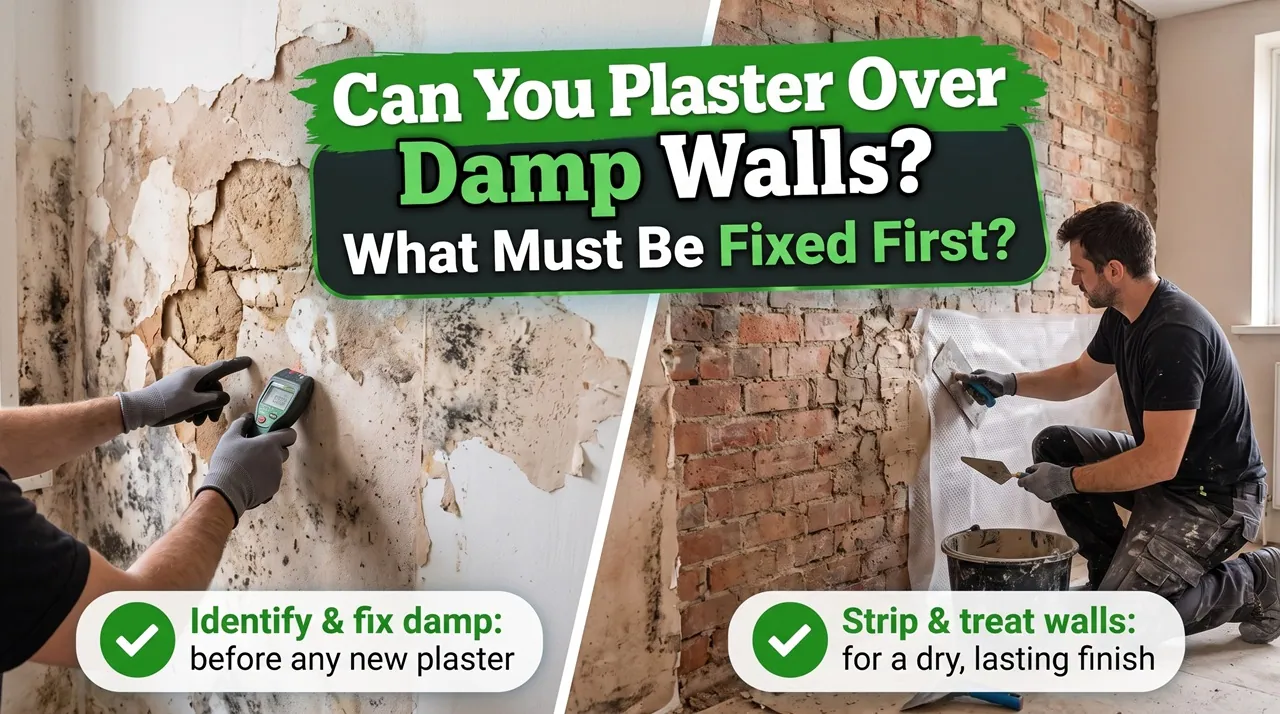
Dampness is the ultimate enemy of gypsum-based products. While bonding is fantastic for suction control, it is detrimental to use it on walls that suffer from active rising or penetrating damp. Bonding plaster acts like a sponge; it will soak up moisture, lose its structural integrity, and eventually blow off the wall in a crumbly, grey mess.
In kitchens or bathrooms with high humidity, you should only use bonding if the walls are bone dry and properly ventilated. If you have a damp issue, you must fix the source and use a specialist renovating plaster instead. Knowing why does and when should you use it for a smooth finish means recognizing that a dry substrate is a mandatory requirement for any gypsum undercoat.
Related Article: Can You Plaster Over Expanding Foam?
Where Does and When Should You Use It in Plastering Work
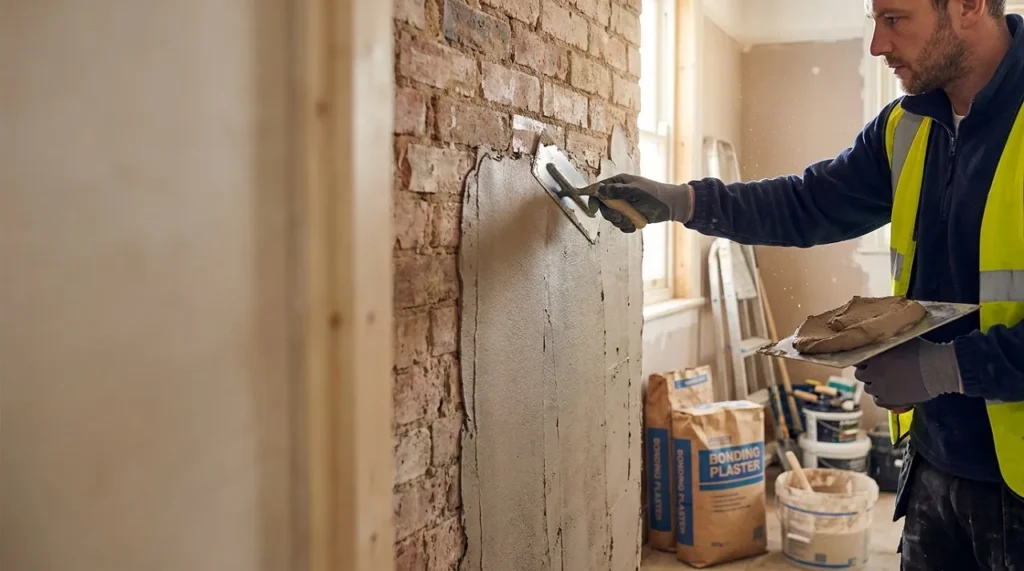
Bonding is the all-rounder of the plastering world. You will find it used in almost every renovation project across the UK. Its primary home is on:
- Engineering Bricks: These are too dense for high suction plasters.
- Concrete Surfaces: Smooth pre cast concrete needs the glue-like grip of bonding.
- Plasterboard Joints: While often taped and filled, bonding can be used to level deep gaps between boards.
- Patching and Chasing: It is perfect for filling deep grooves left by electricians after a house rewire.
What Should You Do If and When Should You Use It for Homeowners
If you are a homeowner attempting a DIY patch, you must resist the urge to over work the material. Bonding has a shorter working time than finish plaster, usually setting in about 90 to 120 minutes. Plasterers Durham suggests that if the mix starts to drag or tear, you have waited too long.
If you miss your window, do not keep adding water to the bucket. This ruins the chemical crystalline structure and results in a weak wall. Instead, scrape it off and start fresh. Always ensure you key the surface by scratching it with a comb while it is still wet; this provides the mechanical grip your final skim coat desperately needs.
Why Does and When Should You Use It for a Smooth Finish
You cannot achieve a mirror like finish on a wonky wall without a solid base. Bonding allows you to build out the thickness of a wall—up to 11mm in a single pass—to hide lumps, bumps, and old damage. Once this layer has gone off but is not yet bone dry, you apply your 2mm skim coat.
This two-stage process is why professional walls look so much better than DIY attempts. The bonding does the heavy lifting of leveling the room, while the finish coat provides the aesthetic beauty. Understanding how to improve and when should you use it in plastering work ensures that your paint or wallpaper looks flawless for years to come.
Semantic Terms for Professional Results
To master your next project, you must understand the mechanics of the set. Using a bonding agent like PVA is essential to manage suction control, especially on non-porous backgrounds. Professional tradesmen at Plasterers Durham often use a feather edge to flatten the backing coat before it enters the hydration phase. This ensures the mechanical key is deep enough to prevent the final skim from becoming blown or hollow.
Frequently Asked Questions
How Long Does Bonding Take to Dry Before I Can Skim It?
In most UK homes, bonding will be firm enough to skim in 2 to 4 hours. However, I tell my clients that you must wait until it is set but still has a slight dampness. If it dries out completely, you will need to re-apply a bonding agent to stop the wall from sucking the life out of your finish coat.
Can I Use Bonding Plaster Over Painted Walls?
It is risky because the paint acts as a barrier. If the paint is flaking, the bonding will fall off. I recommend scoring the wall heavily and applying a grit-based primer like Blue Grit before using bonding. This ensures the plaster has a mechanical key to grab onto.
Is Bonding Better Than Hardwall for Brickwork?
Not always. If you are working on high suction grey blocks or common bricks, hardwall is superior because it handles the suction better. Bonding is specifically for low suction, smooth surfaces. Using the wrong one can lead to the plaster burning and cracking.
Does Bonding Plaster Provide Any Insulation?
While it adds a small amount of thermal mass, it is not an insulation product. If you have a cold solid wall property, we often suggest using insulated plasterboard instead. Bonding is purely a leveling and preparatory undercoat.
What Happens If I Use Bonding in A Cellar?
I strongly advise against this. Cellars are naturally prone to moisture, and gypsum bonding will fail rapidly. At Plasterers Durham we always use sand and cement renders with waterproof additives for below ground work to ensure a permanent, dry finish.