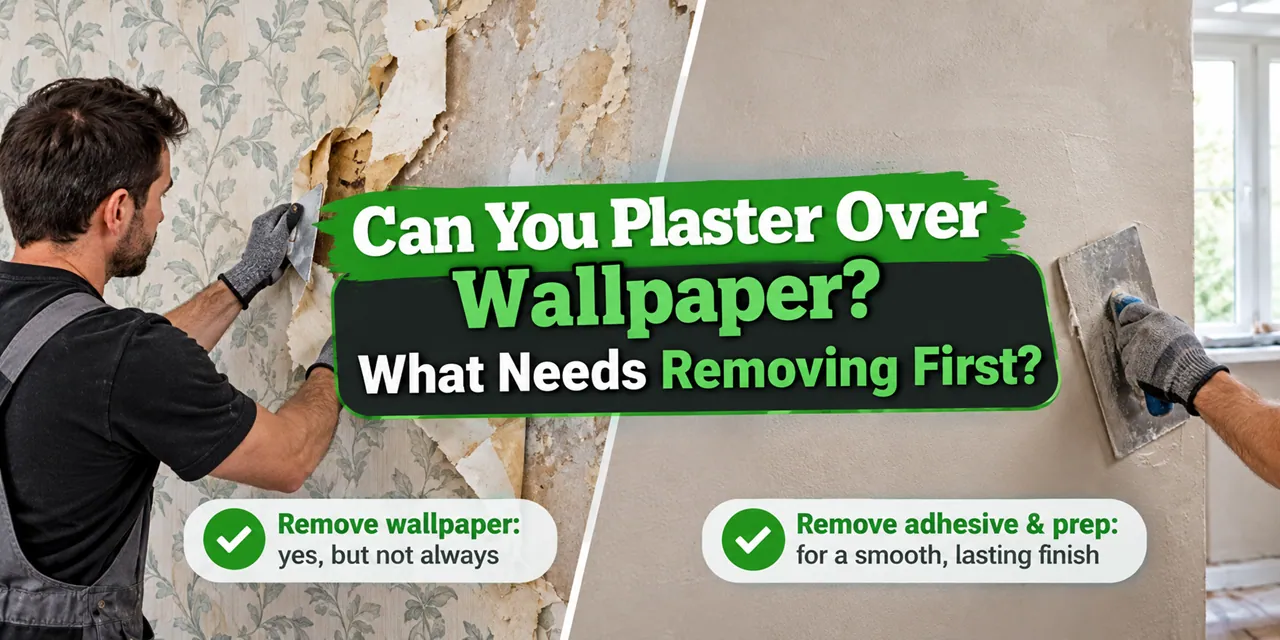
In most cases, wallpaper should be removed before plastering or skimming. Fresh plaster needs a sound and stable background, while wallpaper creates an extra layer between the new plaster and the actual wall. If the wallpaper or its adhesive softens, lifts or loses adhesion, the new finish can lose support with it.
So, if you are asking can you plaster over wallpaper, the normal approach is to strip the paper first, deal with problematic paste residue, inspect the exposed plaster or plasterboard and then decide what preparation or repair the wall needs.
Why Is Wallpaper a Poor Base for New Plaster?
The problem is not simply whether finishing plaster can initially stick to the face of the wallpaper. The more important question is what the entire finish will be relying on underneath.
The build-up looks like this:
wall substrate → wallpaper paste → wallpaper → new plaster
Even if the plaster adheres to the paper, it still depends on the old paste continuing to hold that paper firmly against the wall. Fresh plaster also introduces moisture, which can affect paper and older water-sensitive adhesives.
That is why plastering over wallpaper creates an unnecessary weak layer. The wall may look sound before work begins, yet lifted seams, small bubbles or weakly bonded areas can remain hidden until moisture and additional weight are introduced.
Current UK trade guidance generally recommends removing wallpaper and lining paper before plastering for this reason.
What Should Normally Come Off Before Skimming?
Preparing a previously wallpapered wall means exposing enough of the true background to assess it properly. It is not simply a matter of peeling off the decorative pattern and immediately applying plaster.
The main materials that may need attention are:
- the visible wallpaper
- backing or lining paper
- loose fragments around seams and corners
- unstable wallpaper paste or adhesive residue
- loose paint revealed underneath
- any plaster that is already hollow, crumbling or detached
The aim is a sound substrate, not an unrealistic requirement to remove microscopic traces of every previous decorative material.
Where a wall is being refurbished rather than simply decorated, Plasterers Durham’s internal plastering services cover skimming, patch repairs and fuller replastering depending on the exposed wall condition.
Does the Type of Wallpaper Change the Answer?
Different wallcoverings create different stripping problems, but changing the type of wallpaper does not remove the underlying dependency on the wallpaper adhesive.
Lining Paper
Lining paper may look like a better candidate because it is plain and can appear firmly attached. It is still a paper layer held to the wall with adhesive, so the normal recommendation is to remove it before a new skim.
This also allows the plasterer to see why the lining paper was used originally. It may have been hiding minor cracks, uneven old plaster or previous repairs.
Painted Wallpaper
Paint can make wallpaper harder to recognise and harder to remove because the coating may slow moisture penetration during stripping. Several layers of paint and paper can also conceal seams and areas where the bond underneath has weakened.
Painting the paper does not turn it into the same substrate as sound painted plaster. Recent UK discussions show homeowners sometimes only discover that a textured or painted surface is wallpaper after they begin renovation work.
Vinyl, Washable and Textured Wallpaper
Vinyl-coated and washable papers introduce another issue because the exposed surface can be relatively non-porous. Anaglypta, woodchip and other heavily textured papers can also conceal the true wall profile underneath.
With all of these coverings, stripping first gives a clearer picture of what the plaster will
Does Wallpaper Paste Need Removing Before Plastering?
Removing the sheets of wallpaper is only the first stage. Old paste can remain as patches, films or sticky residue on the exposed wall.
Heavy or unstable residue can interfere with subsequent preparation, so it should be dealt with before the final plaster system is chosen. That does not mean every wall should be aggressively sanded until absolutely no trace remains. The preparation should reflect the actual surface, whether that is old plaster, plasterboard or masonry.
British Gypsum’s current guidance for damaged, partially de-papered plasterboard is useful here. It advises removing unstable wallpaper residues and other loose material, cleaning the surface and getting back to a sound background before the wall is prepared for skimming.
What Can Wallpaper Hide?
This is often the point where the project changes.
Wallpaper can make a wall look relatively uniform even though the surface underneath has been repaired many times. Once the decorative layers come away, you may find hairline cracks, previous filler, loose skim coats or patches where old plaster has lost its bond.
In an older Durham or County Durham property, stripping several decorative layers may also expose a wall construction that was not obvious beforehand. That could be modern gypsum plaster, plasterboard, older plaster or another traditional background. The material should be identified rather than assuming every old wall needs the same treatment.
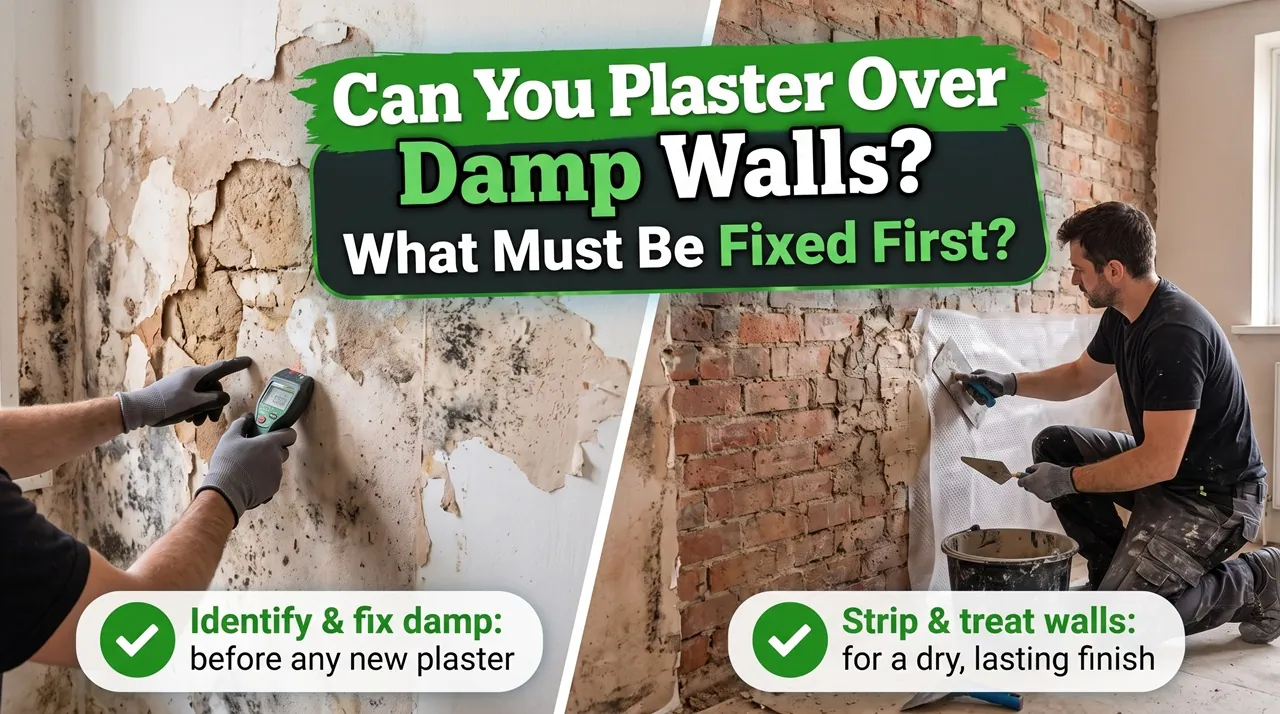
A damp stain should also be treated as evidence requiring investigation, not something to immediately cover with fresh plaster.
What If Some Plaster Comes Off with the Wallpaper?
It does not automatically mean the entire wall needs replastering.
Small local areas may simply need making good. A wall with widespread hollow, loose or crumbling plaster requires a different response because a skim coat cannot restore the bond between failed old plaster and the substrate behind it.
The decision becomes more significant when wallpaper removal exposes plasterboard. Torn face paper, damaged board edges or isolated defects need assessing before a finish is selected. Treeing the problem as simply “cover it with plaster” can hide an unsuitable background.
For that specific situation, the Plasterers Durham guide on whether plasterboard needs skimming explains how board condition and the intended finish affect the next step.
What Should Happen After the Wallpaper Is Off?
The exposed wall determines the job from this point onwards.
| Wall After Stripping | Likely Next Consideration |
| Sound, firmly bonded plaster | Preparation followed by possible skimming |
| A few damaged patches | Local making good may be sufficient |
| Loose or hollow areas | Failed plaster needs assessing or removing |
| Significant paste residue | Cleaning and appropriate surface preparation |
| Stable cracks | Investigate and prepare before finishing |
| Damaged plasterboard | Assess whether repair or replacement is needed |
| Damp or mould staining | Identify the moisture source first |
| Traditional plaster | Check compatibility before selecting materials |
This table is general guidance rather than an on-site diagnosis. Two walls that looked identical under wallpaper can need very different preparation after stripping.
Can You Skim the Wall Once the Wallpaper Has Been Removed?
Often, yes, if the plaster underneath is still sound.
Skimming works best as a finishing process over a suitable prepared background. It should not be used to conceal loose plaster, unresolved damp or material that is separating from the wall.
A stripped wall may be ready for a skim where the existing plaster is stable, defects have been repaired, problematic paste has been addressed and the chosen preparation is suitable for that particular substrate. Plasterers Durham’s wall skimming services are relevant where the underlying wall remains suitable for a finishing skim rather than full replacement.
The key change is that the plasterer can now make that decision from the actual wall, instead of judging it through a layer of paper.
What Should Be Ready Before the Plasterer Arrives?
The scope should be agreed before the plastering date because not every contractor automatically includes wallpaper stripping.
If removal is the homeowner’s responsibility, the useful objective is to expose the walls without unnecessarily damaging the background. Excessive steaming can affect weak existing plaster or plasterboard, while aggressive scraping can gouge a surface that might otherwise have needed only minor preparation.
Once stripped, allow the wall condition to guide the next stage rather than trying to make it appear perfectly smooth yourself. In particular, tell the plasterer about areas that sound hollow, move when touched, show damp staining or lost significant material during stripping.
Why Multiple Wallpaper Layers Deserve Extra Attention
Several generations of paper create several potential adhesion layers.
For example, a wall might contain old plaster, paste, lining paper, another adhesive layer, decorative wallpaper and then paint. Plaster applied on top would depend on every one of those layers remaining stable.
This is also why apparently stubborn wallpaper should not automatically be treated as “strong enough to plaster over”. The visible surface might be difficult to remove while one of the older layers beneath it is poorly bonded.
Recent UK renovation discussions regularly describe old wallpaper revealing patchy or failing plaster only after stripping begins.
Is Plastering Over Wallpaper Ever Worth the Risk?
You will find online examples where people say it has worked, sometimes for years. You will also find recent advice suggesting it can be attempted as a last resort on exceptionally well-bonded paper using specialist preparation.
That does not change the preferable specification for an ordinary refurbishment. Leaving wallpaper introduces a layer that is unnecessary and prevents proper inspection of the wall underneath.
For a homeowner planning a durable plastered finish, removing the covering first provides a much more defensible starting point.
Frequently Asked Questions
Can You Plaster Directly Over Wallpaper?
It is normally better not to. The new plaster would rely on both the wallpaper and its adhesive remaining firmly bonded to the wall.
Can You Skim Over Lining Paper?
Lining paper should normally be removed first. Although it may appear secure, it still creates an intermediate paper-and-adhesive layer beneath the skim.
Can You Plaster Over Painted Wallpaper?
Paint does not remove the underlying wallpaper risk. Painted paper can also be harder to strip and may conceal seams or several older decorative layers.
Does Wallpaper Paste Need Removing Before Plastering?
Problematic or unstable paste residue should be addressed so that the final preparation is applied to a sound background. The precise treatment depends on the wall and plaster system rather than one universal method.
Can You Skim Immediately After Removing Wallpaper?
Not automatically. The exposed wall first needs checking for residual paste, loose plaster, cracks, damaged plasterboard and unresolved moisture before deciding whether it is ready for skimming.
What if Plaster Comes Off While Removing Wallpaper?
Small damaged areas may be repairable. If large sections are hollow, loose or crumbling, more extensive plaster removal or replastering may be necessary.
Will a Plasterer Remove Wallpaper Before Skimming?
It depends on the agreed scope of work. Do not assume stripping is included. Confirm beforehand whether the homeowner, decorator or plastering contractor is responsible for removing the existing covering.
Start With the Wall, Not the Wallpaper
The best answer to can you plaster over wallpaper is that the paper should normally come off before the final plastering decision is made.
Removing wallpaper exposes the substrate that will actually support the new finish. If that surface is sound, the wall may need little more than appropriate preparation and skimming. If stripping reveals blown plaster, damaged plasterboard, cracks or moisture, those issues can be dealt with before they are hidden again.
For homeowners in Durham and County Durham, Plasterers Durham can assess exposed internal walls and determine whether local repairs, preparation, skimming or more extensive plaster work is appropriate. Wallpaper removal should therefore be viewed as the point where the true condition of the wall becomes visible, not simply as an inconvenient extra step before plastering.