Wait a minimum of four to seven days after a skim coat before painting, and up to six weeks for thicker plaster on brick or blockwork. That’s the short answer to how long after plastering can you paint, and Plasterers Durham hears the question on nearly every job. The real answer depends on the plaster type, the thickness applied, and how well the room is ventilated. Get the timing wrong and you risk peeling, bubbling, or a patchy finish that ruins weeks of prep work.
Why Painting Too Early Ruins the Finish
This is really the whole question behind how long after plastering can you paint. Fresh plaster is porous. It holds a large amount of mixing water, and that water has to evaporate before the surface is ready for paint. Seal it in too soon with emulsion and the moisture has nowhere to go. It sits trapped behind the paint film, and within a few months you’ll see bubbling, discolouration, or paint lifting clean off the wall.
There’s a knock on effect too. Plaster shrinks slightly as it dries out. If paint goes on before that shrinkage finishes, hairline cracks often telegraph straight through the topcoat, and you’ll be back sanding and repainting a wall you thought was done.
Signs Your Plaster Is Actually Dry Enough to Paint
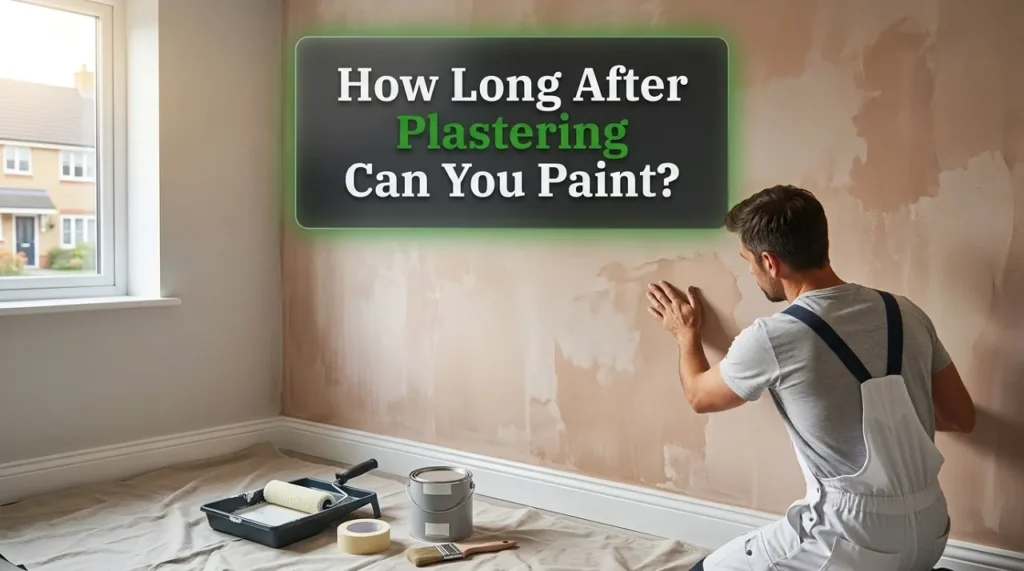
Colour is the clearest sign. Wet plaster looks dark, often brown or deep pink. As it dries it lightens to a consistent, pale pink or cream. Patchy colour, especially in corners or near skirting boards, means those areas are still holding moisture and need more time.
Touch is a useful backup check. Dry plaster feels cool and slightly chalky, never damp or cold. A quick guide on reading new plaster recommends running a hand across the surface and waiting longer if there’s any hint of dampness at all. A cheap moisture meter takes the guesswork out entirely, and readings should sit below 15 to 20% before you go anywhere near a paint tin.
Want Your New Plaster Checked Before You Paint?
Plasterers Durham can assess a room’s drying progress on site and tell you honestly whether it’s ready, rather than leaving you to guess against a calendar. If you’ve had skimming or a full plaster overhaul done recently and want a second opinion before you start decorating, get in touch and we’ll take a look.
Factors That Change Your Plaster Drying Time
Ventilation matters more than almost anything else. Plaster releases moisture into the surrounding air, and if that air can’t move, drying stalls. Opening windows on opposite sides of a room creates a through draught that clears damp air far faster than a single window ever will.
Thickness and substrate change the timeline too. This is really where most confusion sits when people ask how long after plastering can you paint, because a thin skim and a thick render behave very differently. Durham’s winter humidity slows things down further, so a job started in December will nearly always need longer than the same job done in July. Cold, damp conditions are the main reason plastering jobs finish later than homeowners expect.
Plasterboard Skim or Solid Wall Plaster: Different Drying Times
| Surface Type | Typical Drying Time | Key Consideration |
| Skim over plasterboard | 4 to 7 days | Board doesn’t absorb moisture the way masonry does |
| Bonding and finish over solid brick or block | 3 to 6 weeks | Thicker coat on an absorbent substrate holds water far longer |
| Render on exterior or older solid walls | Up to 6 weeks | North East damp and cold slow the process further |
This is one area where DIY guides online tend to blur two very different situations together. Treating a thin skim the same as a full bonding and finish job on solid wall is how people end up painting three weeks too early.
What We See on Plastering Jobs Across Durham
On a terrace conversion in Gilesgate last winter, a homeowner had a full render and skim done to two internal walls that back onto solid stone. Unsure exactly how long after plastering they could paint, they went ahead after nine days, going by advice they’d read that suggested a week was standard. Within six weeks, dark patches reappeared through the paint in exactly the spots where the plaster sat thickest, over the old stone reveals. The plaster hadn’t fully released its moisture, and the paint film trapped it. The wall had to be stripped back, dried out properly with the heating on and windows cracked open for another three weeks, then repainted from scratch.
The lesson from that job carries into most others we see. Skim coats over plasterboard are usually straightforward and forgiving. Anything applied over old solid brick, stone, or block deserves at least double the wait time you’d expect from a plasterboard job, particularly in colder months.
Why a Mist Coat Is Not Optional on New Plaster
Skipping it is a genuine mistake, not a shortcut, and it’s a big part of getting how long after plastering you can paint right in practice. A mist coat is ordinary emulsion diluted with water, roughly 70% paint to 30% water, applied as the first layer once plaster is fully dry. It seals the surface and lets the topcoat sit evenly rather than soaking in patchily and leaving visible brush marks. Our mist coat guide covers ratios and application in full.
Mistakes That Delay a Proper Paint Job
- Painting on colour alone: a wall can look pale pink on the surface while still holding damp underneath, especially near corners or window reveals. Combine colour with a touch test before committing.
- Using a dehumidifier too aggressively: pulling moisture out of the air faster than the plaster can release it often causes surface cracking rather than speeding things up safely.
- Skipping the mist coat to save a day: undiluted paint straight onto new plaster soaks in unevenly, and you’ll end up applying extra topcoats to fix patchiness that a proper mist coat would have prevented.
- Ignoring the substrate underneath: a skim over plasterboard and a full render over solid brick are not the same job, and treating them with the same drying timeline is the single most common reason paint fails on older Durham properties.
Ways to Help Plaster Dry Faster, Safely
Good airflow, moderate background heating, and time are the safest combination for anyone trying to shorten how long after plastering they can paint. Trade guidance advises against forcing the process with high heat or aggressive dehumidification, since both can dry the surface faster than the core, leading to cracking that wasn’t there before. Natural ventilation, kept steady over several days, remains the most reliable method.
Frequently Asked Questions
How Long After Plastering Can You Paint a Standard Skim Coat?
A standard skim coat over plasterboard typically needs four to seven days in a heated, ventilated room. Thicker coats or plaster over solid brick and block can take three to six weeks.
Can You Paint Plaster After 24 Hours?
No. Plaster at 24 hours is still wet and actively curing. Painting this early almost always leads to peeling or trapped moisture within weeks.
What Happens If You Paint Plaster Too Soon?
Trapped moisture causes bubbling, patchy discolouration, and paint that lifts or peels away from the wall, often within a few months of application.
What Colour Is Plaster When It’s Fully Dry?
Fully dry plaster is a consistent, pale pink or cream colour with no dark or damp patches remaining, particularly in corners and near skirting.
Do You Need a Mist Coat Before the Topcoat on New Plaster?
Yes. A mist coat, diluted roughly 70% paint to 30% water, seals porous new plaster so the topcoat sits evenly rather than soaking in and leaving an uneven finish.