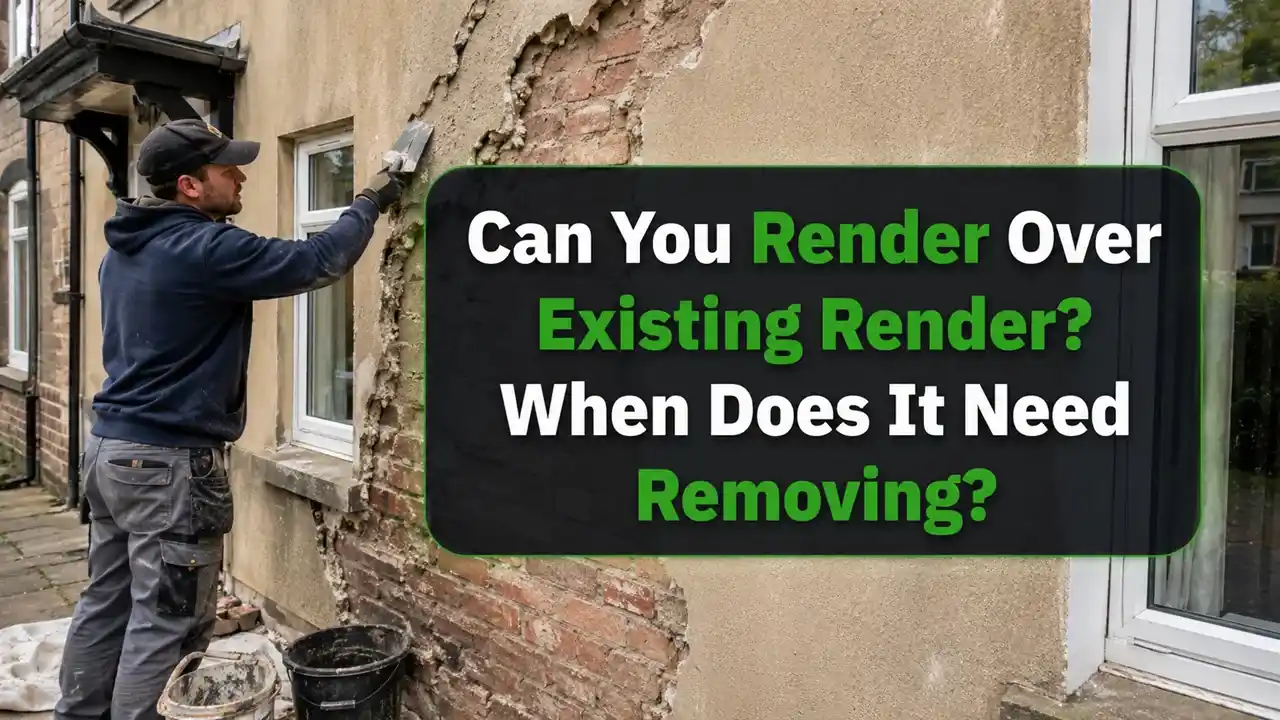
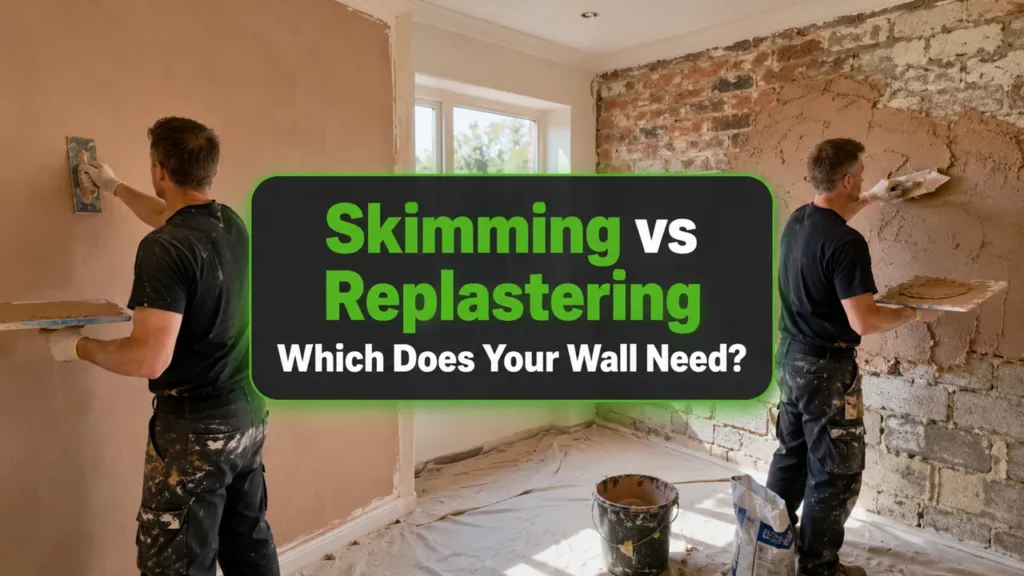
Skimming vs replastering is decided by the condition of the plaster already on the wall. A skim coat can smooth a surface that is dry, stable and firmly attached. Replastering is more suitable when plaster has become loose, hollow, crumbling, damp-damaged or detached from the brickwork or blockwork behind it.
For Durham homeowners, the difficult part is that both walls may look rough from the front. Plasterers Durham assesses whether the visible problem is cosmetic or whether the plaster beneath has lost its bond. The real difference appears when the surface is tapped, pressed and inspected around cracks, damp patches and previous repairs.
Skimming vs Replastering Starts with the Existing Wall
Skimming adds a thin finishing coat over a background that can still support it. It improves texture and appearance, but it does not rebuild a failed base.
Replastering goes further. Depending on the damage, it may involve removing loose sections or stripping a larger area, repairing the background, applying an undercoat and finishing the wall with new plaster.
That is why skimming vs replastering should never be decided from photographs alone. The visible finish matters, but adhesion, moisture and movement matter more.
Use Four Possible Outcomes, Not Just Two
A wall does not always need either a full skim or complete replacement. A professional assessment may lead to one of four sensible outcomes.
Leave and Decorate
If the wall is sound, flat enough and free from active defects, filling a few small marks may be all that is required before decorating.
Repair One Area
A local patch can suit an isolated damaged section where the plaster around it remains firmly bonded. This is common after electrical work, plumbing repairs or the removal of a small failed patch.
Skim the Full Surface
Wall skimming is suitable when the base remains sound but the face is uneven, heavily patched or unsuitable for a clean painted finish.
Replaster the Wall
Partial or full replastering becomes more likely when the existing plaster cannot provide a stable base. Large hollow areas, crumbling material or widespread damp damage usually point beyond cosmetic treatment.
When a Skim Coat Makes Sense
A skim coat is usually the better option when the wall is dry, firmly attached and structurally sound. Minor surface defects can be prepared, and stable hairline cracks may be reinforced before the finish is applied.
Typical examples include old plaster marked by wallpaper removal, shallow trowel lines, small dents, uneven previous repairs or a dated surface that remains solid. The skim creates a consistent finish ready for later decoration without removing sound material unnecessarily.
Homeowners planning this type of work can review local wall skimming services to understand how a finish coat fits into wider wall preparation.
Hollow, Loose or Crumbling Plaster Changes the Answer
Plaster that sounds hollow over a broad area may have separated from the background. The sound alone is not a complete diagnosis, but it is a warning that a fresh finish coat could be relying on a weak layer beneath it.
Loose edges, bulging areas, powdery surfaces and plaster that moves when pressed are stronger signs of lost adhesion. Skimming over these defects may look acceptable briefly, but the new coat remains attached to material that is already failing.
The skimming vs replastering decision therefore changes when the base cannot carry another coat. Failed material normally needs to be removed back to a stable edge before the wall is rebuilt.
Read Cracks by Pattern, Depth and Behaviour
A fine, stable crack is different from a deep crack that continues through the plaster or reappears after previous repair. Crack width alone does not explain the cause.
Fine Surface Cracks
Hairline cracks may be linked to drying, age or minor movement. They may be suitable for preparation and skimming if the surrounding plaster remains secure.
Repeated or Widening Cracks
Cracks that return, spread diagonally, widen or appear alongside movement in doors, floors or masonry need further investigation. New plaster should not be used to hide a possible structural issue.
A plasterer can assess the wall finish, but significant movement may require input from a surveyor or structural professional before plaster repairs begin.
Damp Must Be Solved Before Either Treatment
Neither skimming nor replastering will cure an active moisture problem. New plaster can stain, soften, lose adhesion or develop salt marks if the source remains within the wall.
The cause may be a plumbing leak, defective external fabric, condensation, a chimney issue or another moisture route. The wall needs an appropriate diagnosis, remedial work and enough time to reach a suitable condition before a new plaster system is chosen.
Damp-damaged gypsum plaster may need removal, but not every older wall should be stripped automatically. The original material and construction should be identified first.
What to Check Before Choosing the Repair Depth
A quick wall inspection should look beyond scratches and decoration. These checks help separate a finishing problem from a failing plaster system:
- Adhesion: Does the plaster feel firm, or does it move when lightly pressed?
- Sound: Are hollow areas isolated, or do they extend across much of the wall?
- Surface Strength: Does the plaster remain solid when rubbed, or does it turn powdery and crumble?
- Crack Behaviour: Are cracks fine and stable, or deep, recurring and spreading?
- Moisture: Are there damp patches, tide marks, salt deposits, mould or flaking paint?
- Background Condition: Is brickwork, blockwork or lath exposed, damaged or unusually uneven?
- Previous Repairs: Have filled or skimmed areas repeatedly failed?
- Wall Material: Is the existing finish modern gypsum, traditional lime plaster or an unknown coating?
These checks do not replace a professional assessment. They help explain why one wall may need a light finish while another needs local removal, a new base coat or complete replastering.
Uneven Walls Do Not Always Need Stripping
Mild surface unevenness can often be improved with preparation and a skim. The key question is whether the uneven plaster is solid enough to remain.
Large hollows, pronounced waves or major changes in level may need more than finishing plaster. A plasterer may recommend local build-up, an undercoat, partial removal or another levelling method before applying the final coat.
Skim plaster should not be used as a thick filler for deep defects. Its job is to finish a suitable background, not create a new stable wall from an unsuitable one.
When Old Plaster Has to Come Off
Removal is more likely where large areas are blown, detached, friable or weakened by moisture. The amount removed should be based on the extent of failure rather than stripping every wall by default.
Old plaster should be taken back to material that remains secure. The exposed background can then be checked for loose masonry, damaged joints, contamination, deep hollows and the preparation needed for a compatible replacement.
Where removal is necessary, the guide to removing failed plaster safely explains why the condition of the brickwork beneath matters as much as the visible plaster.
Think About the Wall After the Work Is Finished
Skimming usually causes less disruption because sound plaster stays in place. Replastering involves more preparation, waste and rebuilding, but it may provide the sound base needed when the existing wall has failed.
Durability depends on choosing the right depth of repair. A well-applied skim over solid plaster can last well, while a skim over loose material may fail regardless of how smooth the finish looked on day one.
The difference between skimming and replastering is therefore not simply the thickness of the new material. It is whether the existing wall can remain part of the finished system.
Questions Durham Homeowners Ask About Wall Condition
Can You Skim Over Old Plaster?
Yes, when the old plaster is dry, stable, clean and firmly attached. Loose, hollow or crumbling areas need repair or removal first.
Can Blown Plaster Be Skimmed Over?
A skim coat does not reattach blown plaster. If the plaster has separated from the wall, the failed area normally needs to be removed or properly repaired before finishing.
Which Is Better: Skimming vs Replastering?
Neither is automatically better. Skimming preserves a sound base and improves the finish, while replastering replaces material that can no longer provide a stable surface.
Can Uneven Walls Be Fixed with Skimming?
Slight unevenness may be improved with a skim. Deep hollows, large waves or poor alignment may need an undercoat, local build-up or more extensive replastering.
Should Hollow-Sounding Plaster Be Removed?
It depends on the size and condition of the area. A small isolated hollow may be repairable, but widespread drumming often suggests that the plaster has lost adhesion.
Does Damp Plaster Need Replastering?
Sometimes, but the moisture source must be identified and resolved first. The correct replacement also depends on the wall construction and existing plaster type.
Can One Part of a Wall Be Replastered?
Yes. Localised or partial replastering can be suitable where failure is confined to one area and the surrounding plaster remains sound.
Can You Paint Straight After Skimming?
Fresh plaster must dry adequately before it is decorated. Drying and painting guidance should be treated separately from the decision about whether the wall needs skimming or rebuilding.
Arrange an Assessment Before Covering Failed Plaster
When a wall has widespread hollow areas, recurring cracks, damp damage or an uncertain background, an on-site inspection is the safest way to choose the work. Plasterers Durham can assess whether the surface needs local repair, a skim coat, partial removal or complete replastering.
Durham and County Durham property owners can find local plastering help in Durham when the existing plaster is too damaged or uncertain to judge from the surface alone.
Match the New Plaster to an Older Wall
Period properties may contain lime plaster, lath and plaster or breathable wall finishes that behave differently from modern gypsum systems. Original lime plaster should not be removed simply because it is old or slightly uneven, and compatible local repairs may preserve more of the existing wall.
The right skimming vs replastering choice depends on the material as well as the damage. Historic England notes that removal of historic lime plaster is rarely justified and that localised repairs may be possible where sections have failed; its lime plaster guidance provides further context for traditional walls.