Repairing a plaster ceiling from water damage requires immediate action to prevent structural deterioration, Mould growth, and complete ceiling collapse in Durham properties. Water infiltration from roof leaks, burst pipes, or condensation creates brown staining, sagging sections, and crumbling plaster that compromise both safety and aesthetics. This comprehensive guide walks Durham homeowners through professional repair techniques, from initial damage assessment to final decoration, ensuring your ceiling restoration achieves lasting results without expensive full replacement costs.
How to Spot Water Damage on Plaster Ceilings and Walls
Visible brown or yellow discolouration represents the earliest warning sign of water intrusion, appearing as patches that gradually expand as moisture spreads through plaster. These stains typically start small near the leak source before expanding outward in irregular patterns as water saturates the ceiling structure. Peeling or bubbling paint indicates persistent moisture trapped beneath the surface, weakening adhesion whilst promoting mould spores that create health hazards.
Sagging or bulging ceiling sections signal severe damage where plaster has detached from lath backing, creating dangerous conditions that risk sudden collapse without immediate intervention. Spider web crack patterns spreading across ceiling surfaces indicate structural movement or extensive water saturation that has compromised plaster integrity. Soft, crumbling plaster when touched suggests advanced deterioration requiring complete removal rather than simple patching repairs. Plasterers Durham recommends immediate professional assessment when multiple damage indicators appear simultaneously, particularly in older Durham properties with traditional lath and plaster construction.
Which Issues Cause Plaster Ceiling Water Damage
Roof leaks represent the leading cause of ceiling water damage across Durham properties, particularly following severe storms, missing tiles, or deteriorating flashing around chimneys and skylights. Even minor roof defects allow significant water penetration during prolonged rainfall, gradually saturating insulation and plaster until visible damage appears weeks or months after the initial leak. Burst pipes and plumbing failures within ceiling voids cause sudden, catastrophic water damage requiring emergency response to prevent extensive structural harm.
- High humidity and condensation from poor ventilation create persistent moisture that degrades plaster over extended periods
- Bathroom and kitchen moisture accumulation without adequate exhaust ventilation promotes water damage in adjacent ceiling areas
- Blocked gutters and downpipes force water under roof edges, saturating ceiling structures from above
- Central heating system leaks from expansion tanks or radiator pipes create hidden ceiling damage before visible signs appear
- Structural movement and settlement cracks provide entry points for water infiltration during heavy rainfall
Durham’s climate with consistent rainfall throughout the year exacerbates water damage risks, making regular roof inspections and prompt leak repairs essential preventative measures. Professional plasterers identify underlying causes before commencing repairs to prevent recurring damage after restoration work completes.
What Affects Water Damaged Plaster Ceiling Repairs Without Hiring Professionals
Damage Extent and Severity
Small patches covering less than one square metre with surface staining only suit DIY repair attempts by confident homeowners with basic plastering experience. Extensive damage exceeding 30% of ceiling area, multiple sagging sections, or complete plaster detachment from lath requires professional intervention to ensure structural safety. Durham properties built before 1950 often feature traditional lime plaster construction demanding specialist knowledge and materials unavailable to general DIY enthusiasts.
Available Tools and Skills
Successful plaster ceiling repair demands specific equipment including hawk and trowel, mixing tools, safety gear, and quality finishing plaster matching existing ceiling composition. Overhead plastering requires considerable skill development, with first attempts typically producing uneven surfaces, visible trowel marks, and extended drying times compared to professional work. Durham homeowners lacking plastering experience should attempt only minor repairs whilst engaging professionals for comprehensive restoration projects.
Time and Physical Demands
DIY ceiling repairs commonly extend over multiple weekends due to required drying times between coats, learning curves, and physical fatigue from overhead working positions. Professional plasterers complete medium room ceiling repairs within one to two days, minimising disruption whilst guaranteeing quality finishes that amateur attempts rarely achieve. The cost savings from DIY work often prove negligible when accounting for tool purchases, material waste, and potential remedial work correcting poor repairs.
Read Article: How to Prepare an Artex Ceiling for Skimming
How to Check Water Damaged Plaster Ceilings in Damp Rooms
Begin comprehensive ceiling assessment by pressing firmly across different areas, checking for soft spots, movement, or hollow sounds indicating plaster separation from backing. Document all damage locations using photographs and measurements, creating clear records for insurance claims or professional quotations. Access ceiling voids from above through loft hatches when possible, inspecting for active leaks, saturated insulation, and timber condition that affects repair approaches.
Use moisture meters to identify hidden dampness beyond visible staining, as trapped water continues damaging plaster structures even after surface drying occurs. Test for mould growth behind damaged areas, as extensive fungal colonisation requires specialist remediation before plastering work proceeds. Professional inspections reveal structural concerns invisible to homeowners, including compromised joists, electrical hazards, and asbestos containing materials in older Durham properties.
Step by Step Plaster Ceiling Water Damage Repair Process
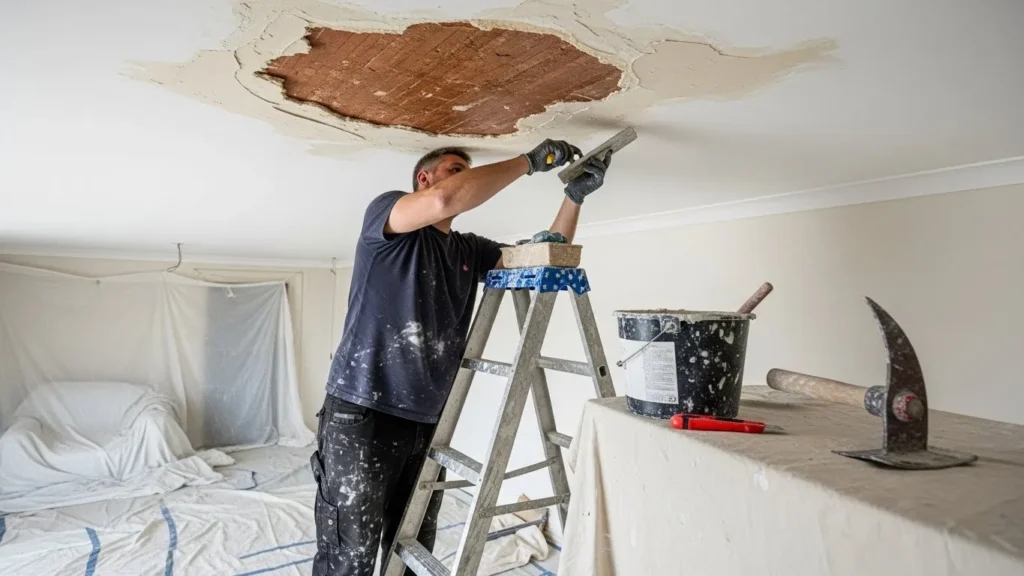
Eliminate the water source completely before commencing any repair work, whether fixing roof tiles, repairing burst pipes, or improving ventilation to prevent condensation. Allow damaged areas to dry thoroughly for at least 72 hours, using dehumidifiers and fans to accelerate moisture removal from plaster and timber structures. Remove all loose, crumbling, or unstable plaster using scrapers and hammers, extending removal to solid, firmly attached material that withstands firm pressure.
Apply PVA bonding solution diluted 3 parts PVA to 1 part water across exposed lath or plasterboard, creating adhesive surfaces for new plaster application. Mix finishing plaster to smooth, lump free consistency following manufacturer instructions, typically requiring gradual water addition whilst continuously stirring to achieve proper workability. Apply the first coat at approximately 5mm thickness using firm trowel pressure to force plaster into all gaps whilst building surface level.
Allow initial coat to firm up for approximately 30 minutes before applying the second finishing coat at 2 to 3mm thickness. Trowel the final coat smooth using increasing pressure and water spray to achieve polished finishes matching surrounding ceiling quality. Feather repair edges into existing plaster to create imperceptible transitions, avoiding obvious lines that reveal repair locations.
Understanding Water Damaged Plaster Ceiling Repair Costs in Durham
Small patch repairs covering limited damaged areas typically cost between £150 and £200 in Durham, including materials and professional labour. These straightforward repairs suit minor water damage where plaster remains structurally sound and only surface restoration proves necessary. Medium ceiling repairs at 9 square metres average £275, whilst 15 square metre areas cost approximately £360 for complete replastering work.
Comprehensive ceiling water damage repair averaging £1,550 encompasses leak source elimination, electrical work moving lights, complete ceiling replacement, and final decoration. Full ceiling replacement costs range from £400 to £1,000 depending on room size, with large 25 square metre areas reaching £575 for professional plastering alone.
Labour charges average £150 to £200 per day for experienced plasterers, with simple repairs requiring four to six hours whilst extensive damage demands multiple days. Plasterers Durham provides transparent pricing with detailed quotations covering all aspects of water damaged ceiling restoration.
FAQ’s About Repairing Water Damaged Plaster Ceilings in Durham
What Should You Do Immediately If Water Damages Your Plaster Ceiling?
Stop the water source, place buckets to catch drips, document damage with photographs for insurance, and contact professional plasterers for urgent assessment.
How Do You Avoid Making Water Damage Worse During Repairs?
Never attempt repairs whilst ceiling remains wet, avoid aggressive scraping that causes additional damage, and eliminate leak sources before restoration work begins.
What Affects the Final Cost of Water Damaged Ceiling Repairs?
Damage extent, ceiling size, access difficulty, whether electrical work proves necessary, and material choices all influence total repair costs from £150 to £1,550.
How Can You Check If Water Damaged Plaster Needs Complete Replacement?
Press damaged areas checking for soft spots, inspect for extensive sagging or detachment, and assess whether damage covers more than 30% of ceiling area.
What Causes Recurring Water Damage After Ceiling Repairs?
Unresolved leak sources, inadequate ventilation, missed secondary leaks, or improper repair techniques allowing moisture penetration all trigger recurring damage.
Can You Improve Water Damaged Plaster Ceilings Without Full Replacement?
Yes, minor to moderate damage responds well to targeted repairs using proper preparation, quality materials, and professional plastering techniques matching original finishes.
Is It Normal for Repaired Ceilings to Show Slight Colour Differences?
Yes, new plaster typically appears lighter initially but usually matches existing ceiling colour once completely dry and decorated with multiple paint coats.